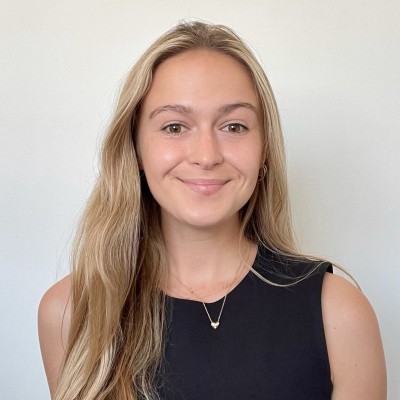
Founded by a Harvard Law student admitted to 9 T14 schools. Every application is reviewed by a curated team member matched to your target schools — so the person reading your draft already knows how to get you in.
Every year, applicants with 175+ LSATs get rejected from top law schools. Perfect numbers with no narrative will not get you in. Meanwhile, candidates with "average" stats are landing full-ride scholarships — because they understood what admissions committees actually read for.
Admitted helps ambitious pre-law students and career-switchers build the kind of application that cannot be ignored. No guesswork. No generic advice. The same approach that earned our founder admission to 9 of the T14 law schools in a single cycle.
"I didn't come from a family of lawyers. I didn't go to a feeder school. What I had was a system — and it worked."
Emily applied to law school with a clear strategy and a disciplined narrative. She was admitted to Harvard, Columbia, NYU, Penn Carey, Michigan, Cornell, Northwestern, Georgetown, and UVA, as well as WashU and UT Austin — including a full ride at NYU.
After fielding hundreds of questions from pre-law students, she built Admitted: a private consulting service that pairs her lived experience of the cycle with a hand-picked team of application reviewers who have been vetted, credentialed, and matched to your target schools.
Every acceptance Emily received in the 2025-2026 cycle — from the schools below. This is what the Admitted framework looks like in practice.
The law school admissions landscape today bears almost no resemblance to what it was in 2010 — let alone 1995. AI-detection tools scan personal statements. Splitter strategies that worked five years ago now backfire. Diversity statements were renamed, retooled, and in many cases retired. Yield protection got more aggressive. Scholarship leverage windows shrank. The decisions admissions officers make today are made under different rules than the ones most consultants were admitted under.
Most paid law school admissions consultants in the U.S. were admitted to law school decades ago. Their playbook was forged in a different application portal, a different LSAT, different essay prompts, different DEI guidance, and different post-COVID scholarship dynamics.
Emily applied last cycle. She’s in the Harvard Law classroom right now. Her own application, her own scholarship negotiation, her own waitlist strategy — all of it happened in the admissions environment your application will be read in.
"The cycle I help you run is the cycle I just lived." — Emily
Admitted is a small, curated team of law school admissions consultants led by Emily. When you onboard, we assign the reviewer who is best positioned to get you into the schools on your list. Every assigned reviewer has a demonstrated track record with your targets — not just general editing experience.
They've personally walked through the admissions process at the school you're applying to — often within the last few cycles — and know exactly what committees at that institution are reading for.
They've read applications on the other side of the table. They know which phrases trigger "auto-reject," which narratives get flagged for scholarship committees, and which stats warrant a second read.
They have a documented track record of editing applications that earned admits to your target program. Not theory — real applications, reviewed, and admitted.
We sit in the trenches alongside you. Strategy from Emily, who just lived the cycle. Editorial firepower from a reviewer matched to your target schools. No templates. No outsourced junior readers.
The biggest mistake pre-law students make is treating their application as a résumé. Committees read for a person, not a spreadsheet. We begin by finding the thread — the through-line that makes you impossible to confuse with the 5,000 other applicants with your LSAT.
This is where your matched reviewer takes a scalpel to every document. The same editorial standard that has taken below-median splitters into Penn, Columbia, and Michigan. We draft, cut, re-draft, and stress-test until every sentence earns its place on the page.
Getting in is half the game. Getting paid to go is the other half. Emily herself earned a full ride at NYU using these exact tactics. After decisions come in, we deploy scholarship negotiation playbooks that have recovered significant aid packages — including for clients who initially received zero merit.
Schools our team has placed clients at — frequently with merit scholarships and admits at programs where the applicant's GPA or LSAT fell below the school's median.
One flat fee for the full application engagement. One strategy call for applicants who want a senior read before committing. Both are designed to pay for themselves many times over in scholarship dollars alone.
Payment plans available for the full package. Credit card & ACH accepted.
Admitted is selective. Emily personally reads every inquiry and only onboards the applicants we can genuinely move the needle for. Book your strategy call below to see if you're a fit.
Book Your Strategy Call →Emily was the only consultant I talked to who had actually applied recently. The other people I’d spoken to gave advice that felt one cycle behind — their personal statement framework was already outdated. Our first call reframed my whole essay direction in 45 minutes.
I came in convinced my GPA was a dealbreaker. The reviewer Admitted matched me with had worked with applicants in my exact stat range — they knew which schools to push and which to walk away from. The school list alone was worth the fee.
The scholarship negotiation playbook is what made it pay for itself. I was ready to accept the first offer I received. Emily walked me through the exact language to use, what cross-offers to leverage, and the timing — the difference was real money.
The most common questions we hear from pre-law applicants, career-switchers, and parents funding the application cycle. If yours isn't here, bring it to the strategy call.
Emily personally handles your strategy — school list, narrative direction, scholarship leverage, and cycle-level decisions. The editorial review of every document is handled by a reviewer from our team who is matched to your target schools. Every assigned reviewer has either been admitted to one or more of your target schools, previously worked in admissions at one of your targets, or has a documented track record of placing previous clients at those schools.
After your intake call with Emily, we match you with the reviewer on our team whose credentials and track record map most directly to your school list. If your list is T3-heavy, you get a reviewer with current T3 experience. If you're applying as a career switcher to a specific regional powerhouse, you get a reviewer with direct editorial or admissions experience at that type of program. The match happens before any drafting starts, so the person reading your work already understands how to get you in.
The full application package is $2,000 flat. That covers unlimited edits on your personal statement, full review of diversity statement and every supplemental, résumé rebuild, recommender strategy, school list build, and scholarship negotiation support. No hourly rates. No surprise add-ons.
If you want a senior read before committing to the full engagement, the $500 60-minute strategy call with Emily is the right entry point. If you upgrade to the full package within 30 days, the $500 is credited in full toward the $2,000.
Yes — and you're exactly who we built this for. Our team's specialty is applicants who outperform their stats. We have a documented track record of admits to top 14 programs — frequently with merit aid — at schools where the applicant's GPA or LSAT sat below the median. We cannot manufacture a story that isn't there. What we can do is find the story that is and frame it so a committee can't put it down.
You can, and thousands of applicants do every year. It's why the average personal statement reads like a LinkedIn summary about "my passion for justice." Committees spot AI-edited work in seconds. Reddit is a firehose of confidently-wrong opinions from people who have not themselves been admitted. We are not anti-AI — but using it well requires knowing what committees actually read for. That knowledge costs either years of trial and error or one well-run cycle with people who have done it.
Expect 4–8 hours per week during active drafting phases, and 1–2 hours per week during strategy phases. We've run this alongside full-time jobs, senior years at demanding undergrads, post-bacc programs, and international relocations. The structure is what makes the time manageable — you will never be staring at a blank document wondering what to do next.
For next cycle: June is ideal. July–August is strong. September is still workable. October onward, we're operating in triage mode. For this cycle: if you haven't submitted, we can still help — we've built applications in three weeks that earned T14 admits. Later-cycle candidates get a compressed but full version of the package.
Then that's enough. Many applicants book the call, get their game plan, and run the rest of their cycle themselves. If that's you, great — no one will push you into the full package. If after the call you realize you want the editorial firepower of the full engagement, the $500 gets credited toward the $2,000 if you upgrade within 30 days.